
Drying Hydrangeas for Home Decor & Gifting
By: Southern Hospitality Company
I don’t dry every flower I grow. Some are meant to be fleeting. But hydrangeas earn the extra effort. Even when the blooms start to fade, they still have presence. There’s a kind of beauty in that last stretch of their season, when the color softens and the petals go from fresh to papery.
I started drying them a few years ago after clipping some for the house and forgetting to change the water. What should have been a mess turned out to be a happy accident. The stems had dried in place. The petals kept their shape. The colors deepened. Since then, I’ve done it with more intention.
If you want to keep your hydrangeas around long after the garden has moved on, here’s exactly how I do it.
When to Cut Hydrangeas for Drying
Timing matters. If you cut them too early, they’ll wilt instead of dry. The trick is to wait until the blooms start to feel a little less alive. Not completely dried on the plant, but no longer fresh and soft. They should feel papery to the touch, almost like thin fabric. You’ll also notice a shift in color. The bright, summery tones will fade into something more antique. Greens become sage. Blues become smoky. Pinks lean into mauve.
Depending on where you live, this stage usually happens in late summer to early fall. I start checking in August and cut into September, but the timing will vary depending on your climate and variety.
Choose a dry morning once the dew has lifted. Use clean, sharp garden snips and cut long stems. You can always trim later, but you can’t add length back.
How to Preserve Color and Shape
If you want your dried hydrangeas to keep their color, avoid direct sunlight. Bright light will bleach the petals and speed up the drying in a way that flattens them. I keep mine in a shaded room with good air circulation. A guest bedroom or a hallway works well.
Humidity is not your friend here. If you live in a particularly damp area, consider placing a small fan nearby on a low setting to keep the air moving. The blooms should not feel damp at any point.
Some people use floral preservatives or silica gel, but I prefer to keep it simple. The slower drying method in water produces results that are soft, organic, and beautifully imperfect.


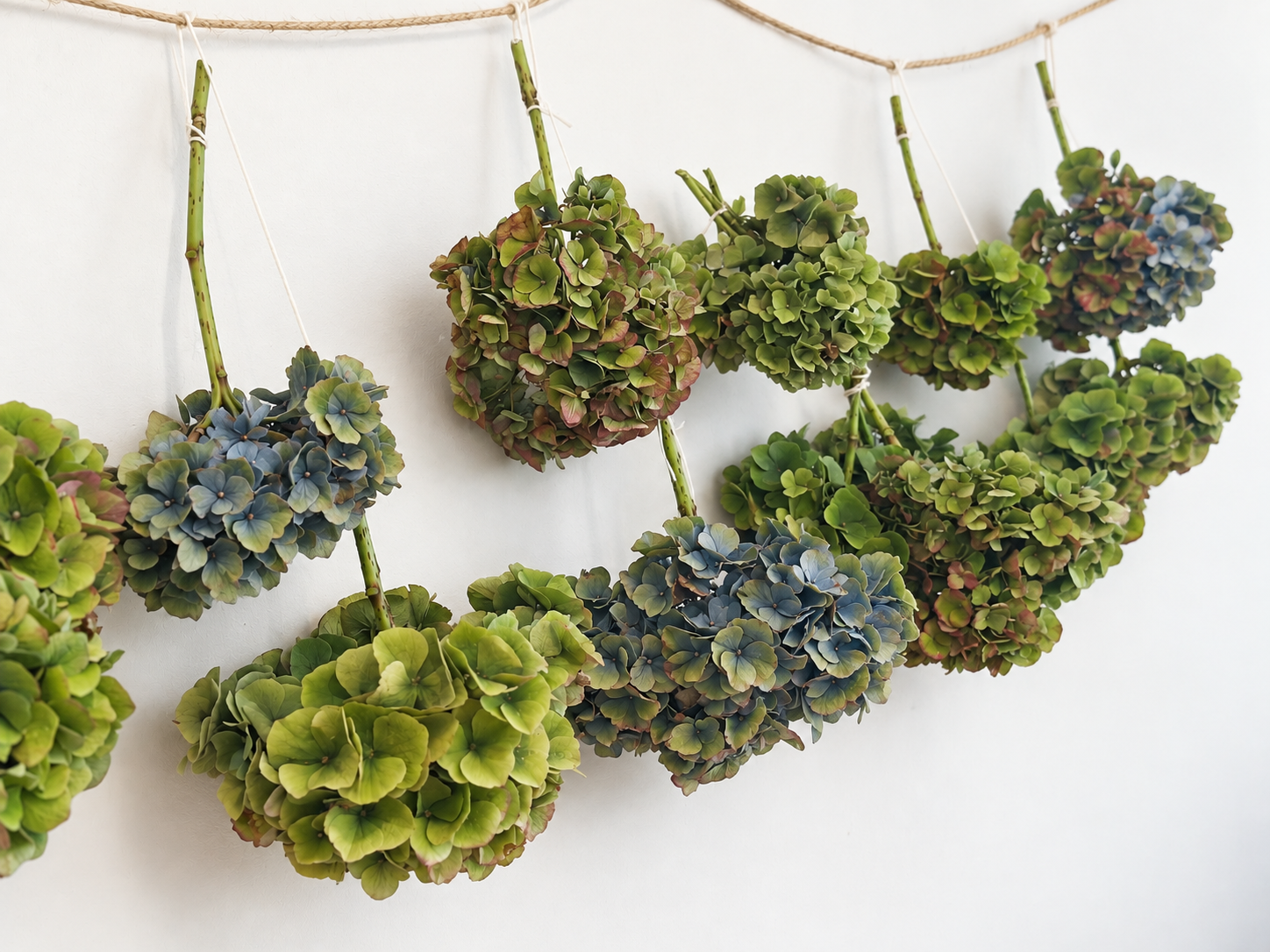
Method: Drying Hydrangeas Upside Down
Hanging hydrangeas to dry is the more traditional method. It’s simple, takes very little space, and works well if you don’t mind a slightly more fragile, vintage-looking finish. I use this method when I want a lighter, airier feel to the petals or when I’ve run out of counter space, which happens more often than I’d like to admit.
Here’s how to do it properly:
- Choose mature blooms. Just like with water drying, the flowers should feel slightly papery and less vibrant. Young blooms will wilt and collapse.
- Strip off all the leaves. They dry poorly and can attract moisture and mold.
- Tie the stems loosely with twine or floral wire. I usually group them in bundles of three to five. Too many in one bunch and the air won’t move properly around the petals.
- Hang them upside down in a dry, dark place. A closet, pantry, or unused room works well. Darkness helps preserve more color. Good airflow is important, too.
- Leave them alone for two to three weeks. They should feel crisp and hold their shape when touched.
Upside-down drying tends to create more structured, sculptural blooms. The petals are often a bit thinner and slightly more brittle than those dried in water. That’s not a flaw, just a different texture. They look beautiful in tall arrangements or mixed into wreaths and dried garlands.
If you want to keep a natural curve to the stems for display, remove them from hanging a little early, before they’re completely dry, and place them upright in a vase to finish setting their shape.


Method: Water Drying
It sounds strange, but a great way I’ve found to dry hydrangeas is to let them dry in water. It slows the process down, which helps the petals hold their shape and color.
Here’s how to do it:
- Remove all the leaves from the stem. They dry poorly and tend to rot or curl in ways that aren’t helpful.
- Fill a vase or container with about two inches of water. No need to add anything else.
- Place the hydrangeas in the vase just like fresh flowers. Keep the container in a cool, shaded place indoors.
- Do not refill the water. Let it evaporate on its own. This usually takes about one to two weeks.
As the water disappears, the blooms will begin to dry naturally. The process is gradual, and that’s what makes it work. Quick drying often leads to shriveled petals and dull color. This method lets the flowers finish their aging gracefully.
Drying with Silica Gel
Silica gel is a moisture-absorbing powder that’s often used for drying flowers while preserving color and shape. This method is more involved, but if you want vibrant, almost life-like results, it’s worth trying.
- Choose freshly cut blooms at their peak color.
- Bury them gently in a container of silica gel, covering the entire flower.
- Seal the container and leave it for several days to a week.
- Once dry, remove the blooms carefully and dust off any remaining powder with a soft brush.
Silica-dried hydrangeas keep more of their original tone and detail, but they’re delicate and need to be handled with care. Think of this method as more ornamental than practical. Beautiful for displays, not ideal for heavy handling.
Method: Pressing
This won’t give you full blooms, but it’s lovely in its own way. Pressed hydrangea petals can be used in framing, card-making, or layered into handmade paper.
- Choose thin, delicate petals (from lacecap varieties or the edges of larger blooms).
- Place them between sheets of parchment or wax paper.
- Press them inside a heavy book or use a flower press.
- Leave for a couple of weeks.
The result is flat, softly faded petals with a watercolor look. Not for everyone, but quietly beautiful in the right setting.
Method: Air Drying in Place
Occasionally, I’ll leave hydrangeas in the garden to dry naturally on the stem. If your climate is dry and your garden space allows it, this can be a lovely way to let nature do the work. The blooms fade slowly and develop beautiful papery textures. Once fully dry, you can snip them off and bring them in.
This method doesn’t give you the same level of control, and not every variety will hold up well, but when it works, it feels honest and effortless — which is sometimes exactly what you want.

Best Hydrangea Varieties for Drying
Not all hydrangeas dry the same way. Some are more cooperative than others.
- Limelight hydrangeas dry beautifully and tend to turn a soft green or parchment color.
- Bigleaf hydrangeas (Hydrangea macrophylla) can be a little more delicate but give you those faded blues, purples, and pinks.
- PeeGee and Annabelle varieties are a bit more temperamental but can still work if cut late enough.
Choose mature blooms. They should feel almost leathery. If they still feel soft and fresh, give them more time on the plant.
How I Use Dried Hydrangeas
Once dried, hydrangeas become part of the house in a quiet, lasting way. I place them in tall pitchers, shallow baskets, or ceramic vases with narrow necks so they don’t need arranging. Sometimes I group them by color, other times I let the mix of tones settle together on their own.
They also make beautiful gift toppers or drawer fillers. I’ve tied a few stems with ribbon and tucked them into linen-wrapped packages. If you host overnight guests, place a single bloom on their nightstand with a handwritten card. Small things stay with people.
The texture of dried petals, the faded elegance of their color, and the way they hold a room without demanding attention. It’s the kind of beauty that lasts past the season.
Drying hydrangeas is not about perfection. Some petals will curl. Some color will fade. That’s part of it. You’re not trying to stop time, just carry something with you a little longer.
– Southern Hospitality Company
Share this post:
Click this link to visit our shop! Follow us on social media below!
Southern Hospitality Company
One response to “Drying Hydrangeas for Home Decor & Gifting”
[…] Drying Hydrangeas for Home Decor & Gifting […]