
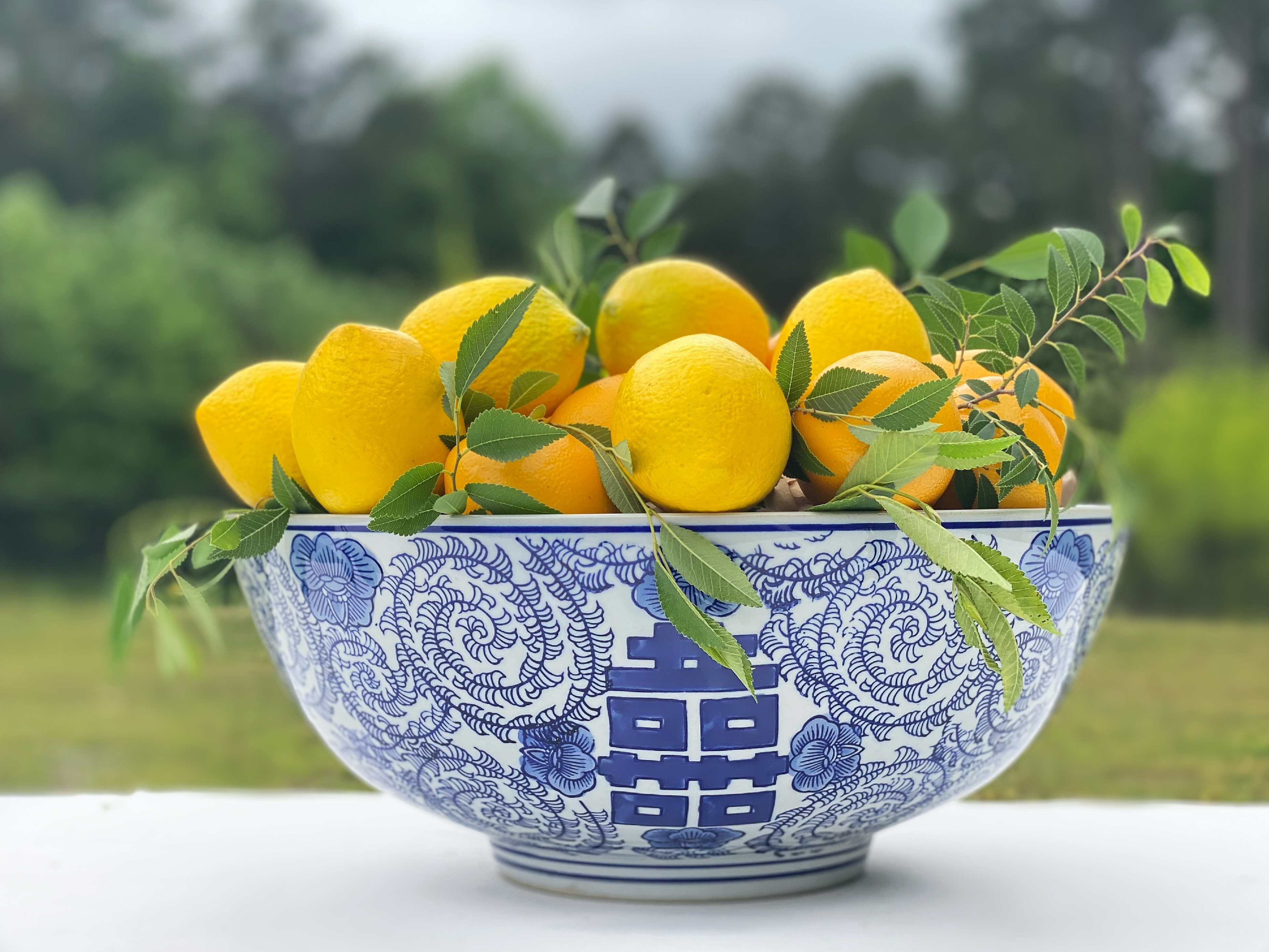
Winter Citrus Secrets from Two Plant-Obsessed Women
By: Southern Hospitality Company
If you’re considering growing a lemon or lime tree, you’re not alone. I’m here to tell you that, like many other things in life, citrus trees will introduce you to new levels of stress, joy, confusion, and pride. My own citrus journey has been a series of ups and downs, many of them involving me learning the hard way, and I wouldn’t have it any other way.
Enter: Cecilia (my lemon tree) and Paloma (my lime tree), both of whom have taught me more than I could’ve ever anticipated about what it really means to care for a plant—namely, that they’re divas. These trees demand attention, but they give back in the form of citrusy rewards. And if you’re wondering whether you can actually grow your own fruit indoors, my answer is a resounding “maybe”—but it will take patience, some trial and error, and a bit of humor along the way.
But I’m not the only one on this citrus adventure. My mom has a lemon tree too. She named hers Valentina. Over the years, we’ve swapped tips, shared updates, and compared notes on what’s working and what’s not. If you’ve ever thought about having a weekly plant update with your mom, let me tell you: it’s a blast.

1. Location, Location, Location—Even for Trees
Let’s talk about the one thing citrus trees really can’t stand: being ignored. Not like the good kind of ignored—where they do fine on their own—but the “I’ve forgotten about you completely and now your leaves are falling off” kind of ignored.
Cecilia and Paloma, like my mom’s Valentina, want to be part of the action. The more foot traffic, the better. At first, I kept Cecilia in the corner of my living room, thinking she’d be fine with the occasional passing glance. But no—Cecilia is like a toddler who craves attention, and she made it clear that she wanted to be where the people are. Now, I keep her near a sunny window, where there’s always someone around. I swear, she’s happier with the sound of human voices (and yes, I talk to her while watering her—don’t judge me).
My mom learned the same lesson with Valentina. At first, her lemon tree lived in the dining room with very little foot traffic, and we didn’t see much action. No flowers, no fruit—just leaves. But when she moved Valentina to my dad’s office, where there’s constant chatter from conference calls and the hum of daily life, the tree started producing flowers and fruit like it was auditioning for a citrus commercial. Now, both Valentina and Cecilia are in their prime, and I swear the sound of my dad’s voice on the phone somehow has the same magical effect on citrus as a grow light.
If you’re bringing your trees indoors this winter, try placing them somewhere with some activity—near a window where you’re likely to walk by, or even in a room where you spend a lot of time. The sound of voices may be the trick to getting them to perk up, and in our case, it’s been the key to more flowers, more fruit, and fewer stressed-out tree owners.
2. Watering: A Delicate Dance of Trial and Error
When it comes to watering citrus trees, you’re not going to get it right every time. And I know this because I’ve tried—Cecilia and Paloma have both endured my beginner mistakes. At one point, I was drowning them in water, convinced that the more I gave them, the better they’d grow. Surprise—waterlogged trees are not the answer.
I’ve since learned that citrus trees are particularly picky about their water. They don’t want to be too dry, but they also don’t want to sit in a swamp. I’ve found that letting the top inch of soil dry out between waterings works best for me. In the winter months, I water less frequently, because the trees are semi-dormant, and overwatering can lead to root rot—trust me, I’ve been there.
Mom has had her share of watering woes too, and we’ve discovered that checking the moisture level with your finger is a reliable trick (or investing in a moisture meter if you’re into that sort of thing). But we both agree: consistency is key. If you’re unsure, it’s always better to err on the side of under-watering than over-watering, as citrus trees prefer to dry out a bit before their next drink.
And here’s a tip I can’t stress enough: humidity is a big deal in winter. With the heater cranking away indoors, the air gets dry, and our trees aren’t thrilled about it. I keep a humidity tray under my pots to add a little moisture to the air. You can also try misting your trees (but don’t overdo it or you’ll end up with mold, and nobody wants that). If you have a humidifier nearby, that’s even better.


3. Pruning: A Little Tough Love Goes a Long Way
Now, pruning citrus trees in the winter might feel like you’re being a little too harsh. But I promise, it’s for the greater good. You’re not just cutting for aesthetics—you’re helping your tree to stay healthy and productive. Cecilia and Paloma have both benefited from a bit of pruning in February to remove any dead or damaged branches. It allows them to channel their energy into healthy growth.
Don’t be afraid to trim back wayward branches or anything that looks like it’s past its prime. Just don’t go crazy—remember, less is more when it comes to citrus trees. I typically give my trees a light prune and leave the more intense shaping for spring.

4. Fertilizing: Less is More (For Real)
If you’re growing your citrus trees indoors during the winter, you don’t need to go all out with the fertilizer. I used to think my trees needed constant feeding to keep them strong, but too much fertilizer can actually stress them out, especially during dormancy. These trees don’t need a gourmet meal every week.
I fertilize mine once a month with a balanced, slow-release fertilizer (or citrus-specific fertilizer, if you’re really fancy). My mom uses organic compost for Valentina, and she’s seen great results as well. You don’t need to overdo it—just a little will go a long way in giving your tree the nutrients it needs to get through the winter and emerge ready to grow come spring.
5. Fruit: The Sweetest Reward
Here’s where it gets exciting (and sometimes frustrating). When you first start out, it’s not uncommon for your citrus trees to produce no fruit at all—don’t panic. The first year I had Cecilia, I got nothing. The second year, she graced me with exactly two lemons. Two. I was practically overjoyed. Now, she’s producing more and more each year.
Same story with Valentina. The first year was a total bust. But now, in her third year, she’s bearing fruit in abundance. The lesson here is simple: patience. Both my mom and I have learned to appreciate the little victories, like when our trees flower for the first time or when we get that one perfect lemon or lime.
Final Thoughts: We’re All in This Together
Growing citrus trees indoors during winter can be a bit of a gamble, but it’s one worth taking. With some patience, trial and error, and a little help from our weekly plant updates, my mom and I have managed to turn our once-sad trees into fruit-bearing champions.
If you’re struggling, don’t worry—you’re not alone. The key is finding the balance between water, light, humidity, and good ol’ human attention. If nothing else, remember: it’s okay to make mistakes. The trees, like us, are works in progress, and with a little love (and maybe some grow lights), you’ll be reaping the rewards of your hard work in no time.
So, grab a cup of tea, talk to your tree, and let’s see what next week’s plant update brings.
-Ashlyn Walters & Julie Pederson, Southern Hospitality Company


Products Our Citrus Trees Love:


Share this post:
Click this link to visit our shop! Follow us on social media below!
Southern Hospitality Company